
Who’s Afraid of Rebecca Woolf?
To Thine Own Self . . . (Notes From a Proud Daughter)
By Fable Isaacson
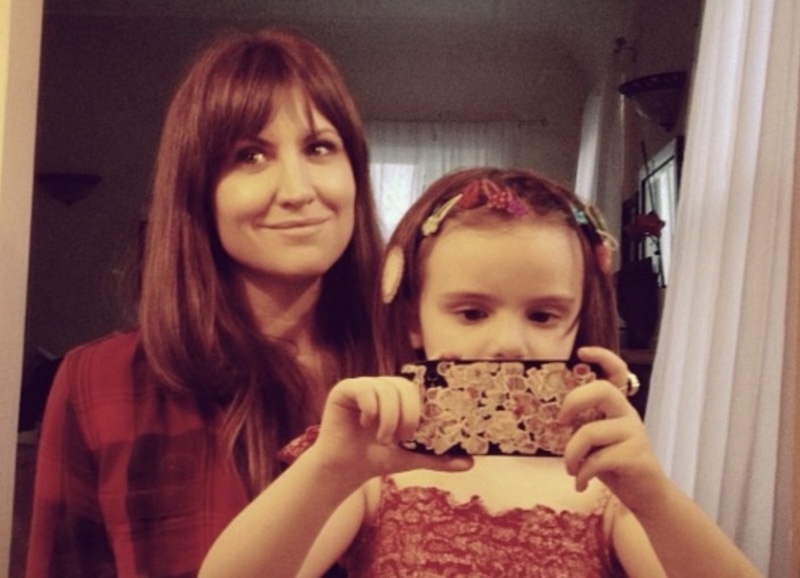
Mother and Daughter: Rebecca Woolf and the author, Fable Isaacson, several years before she penned this interview. (Photo, courtesy Fable Isaacson)
This article is part of the Stage Raw/ Unusual Suspects Youth Journalism Program
Rebecca Woolf is a writer of books and essays, as well as being a single mother of four.
Whoever said women who read are dangerous seriously forgot about the ones who write.
This month, I had the pleasure of interviewing author/essayist Rebecca Woolf, who also happens to be my mom and biggest inspiration. She is the strongest woman I know, constantly speaking out for herself and others, specifically women, single mothers and those seeking validation after the same complicated grief derived from her husband’s death.
She started writing at a very young age, her first personal essay published when she was in high school, an essay she wrote about her first heartbreak at age 14.
“[It] was called Hopscotch and Tears,” Woolf explained. “It was published in Chicken Soup for the Teenage Soul 2. I submitted it as an extra credit assignment in 9th grade and it was the first of multiple essays I published in my teens about unrequited love and the shame that comes with wanting to… be treated like a human being by teenage boys.”
It’s so easy for a daughter to forget that her mother was also a daughter. It was for me, anyway. I mean my mom, the now radical feminist sex columnist, sulking in pre-algebra about a guy who probably shot Skittles up his nose.
“And what’s the most recent published piece you’ve written about?”
Woolf laughed. “Men who deprioritize women’s feelings and pleasure for the benefit of their own.” Like mother, like daughter!
“Has your purpose for writing changed?”
She thought for a bit. “My 30 year career writing personal essays has mirrored 30 years of life experience. While the content has changed significantly, I have always been drawn to writing about the challenges I face in my life as a way to heal, explore, and take back my power while inviting others, I hope, to do the same.”
I can attest that she constantly takes on the strongest of subjects with the most beautiful honesty. Woolf claims that both her willingness and ability to write honestly about her life comes from calluses she amassed during her “tenure standing word-naked in front of strangers all these years.”
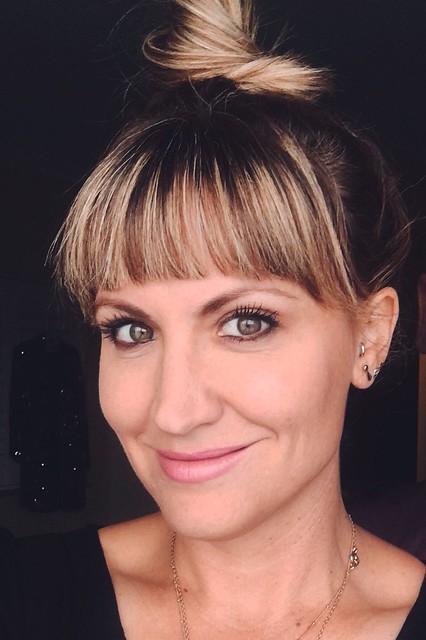
Rebecca Woolf (Photo, courtesy of Rebecca Woolf)
And in a way, her subject matter hasn’t changed.
“I’ve gone from being a teenage girl sad about a boy to being a grown woman angry about patriarchal structure.”
What strikes me the most is how intentionally her work has aged with her. Although her life experiences have shaped the type of pieces she writes now, all of it is rooted in the same passion she’s had since 14.
“I wrote to be free then and to free others. And I write to be free now and to free others,” Woolf told me. “My concept of freedom has changed, of course. The beauty of doing this work for so long is that it ages with me. A mirror for better, for worse.”
Of course writing honestly, especially as a woman, comes with consequences. I asked her whether she’d ever let the fear of other people’s reactions cause her to withhold her whole truth.
“Yes,” she said without hesitation. “Although I didn’t realize it at the time. I thought I was being honest even when I was holding back.”
She then went on to describe the truth as layered. “There is skin and there is fat and there is flesh and there is bone and there is marrow. I wrote honestly about the skin of my life for many years before being brave enough to write about the fat. I like to think I’m in the flesh now. And that, eventually, I will get to the bone and then, hopefully the marrow. I don’t think one can get there without age, experience and a willingness to be ostracized by those she once sought validation from. Art, to me, is being brave enough to burn everything down in order to shine a light on what is true. I feel I am doing that now in a way I never was able to before because I was afraid to turn people off. I’m not afraid to do that anymore.”
I have mad respect for any and all humans whose goal is depth, so naturally my serious/professional/not-a-daughter-interviewing-her-mom persona melted away for just a quick second. I smiled a big ol’ gaping smile.
Woolf chuckled. “You know there’s freedom in being misunderstood. In being hated. In turning off people who were never going to love you anyway. My work is a calling card to the right people and a deterrent to the wrong ones.”
Woolf came of age as a writer on the internet in the early 2000s, when cruelty was casual and being hated was just a part of the job. It’s miraculous she survived that era with four kids and her mental health intact.
I distinctly remember seeing comments throughout my entire childhood that said “how awful her kids must feel about her writing all this stuff.” This rhetoric has always really pissed me off because I couldn’t and still can’t compute how anyone in my shoes could feel anything but pride.
“I know who I am,” she told me. “Nothing anyone says can change that. I feel stronger than I’ve ever been, and I’m proud of what it took to get here.”
And it seems to me, anonymous accounts love to get parasocial when it comes to deciding how to mother kids that aren’t theirs.
Even in the face of hate, judgement, and unbridled misogyny, Woolf continues to do it all.
Being dead true to oneself, despite knowing that people will be out to get you for it? Ay, there’s the rub! I am the proudest daughter in the world.
And to be honest, I think you should be afraid of Rebecca Woolf, a little at least.