Trying to Move the Arts at Moving Arts
Darin Anthony and Brandon Bales on Live Theater and the Movie Biz
By Keelyn McDermott
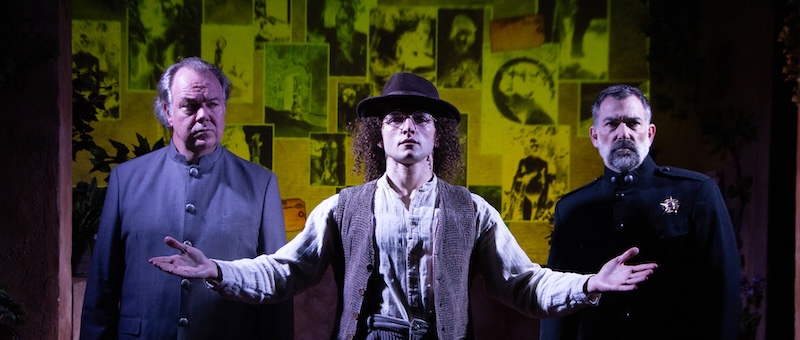
Rob Nagle, Massi Pregoni and Robert Mammana in “Tasty Little Rabbit” at Moving Arts in 2025 (Photo by Philip Pirolo)
This article is part of the Stage Raw/Unusual Suspects Youth Journalism Fellowship
Los Angeles has the potential for a nation-leading theater industry which film can bolster. In fact, theater could be just what the city needs – a place for otherwise isolated peoples to come together and share their diverse stories.
For the last six months, I have worked as a Production Intern through Los Angeles County’s Department of Arts and Culture at Moving Arts Theatre Company in Atwater Village. Artistic Director Darin Anthony explains how 33 years ago, Moving Arts was a haven for artists which exclusively did LA premieres. Anthony took over the running the company 13 years ago and in that time, he’s focused the mission on developing and producing only Los Angeles playwrights.
After helping carry along said mission through stage managing their new works festival and stage managing/costume designing their fall show, I sat down with Anthony and Brandon Bales – an actor with a few Moving Arts productions under his belt, including Amy Dellagarino’s Hello My Name Is… which closed December 7th.
Darin Anthony: LA is the film capital of the world, although nowadays that’s being called into question. My goal with Moving Arts, however, is to increase the cultural export of plays out of Los Angeles so that people can take notice of all of the great theater artists we have creating work here. It’s such a culturally rich and diverse city. It has so many places to pull from it just felt like a really rich tapestry in which to embed myself and make our mission.”
Stage Raw: So, Brandon, why do you think LA isn’t recognized as a “theater town?” Why can’t film and theater both thrive in this city? Because they’re both based in storytelling, right?
Brandon Bales: We don’t have the same institutional footing as, say, Chicago or New York City, because of the history of those places.
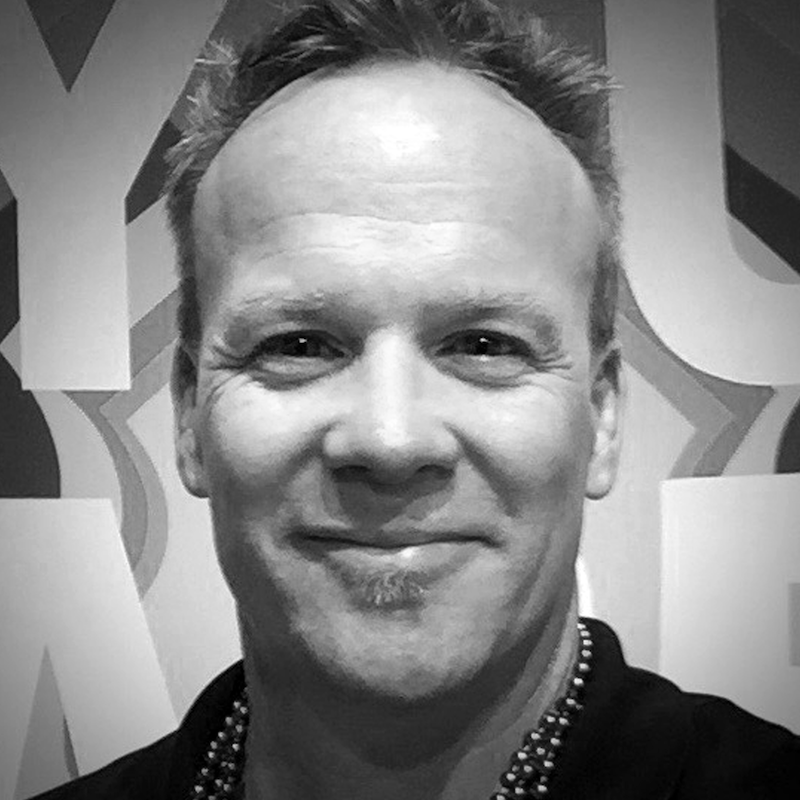
Darin Anthony (Photo courtesy of Moving Arts)
DA: Broadway has always been there [since about 1750]. We had theaters here in Los Angeles and those got turned into movie houses, then churches or whatever, and then white flight happened.
Downtown Los Angeles went from being 93.4% white in 1950 to 24.6% by 1980. This, thanks to fears of [racial]desegregation, [was] made practically impossible by strategic highway construction and redlining initiatives and worsened by the Watts Riots of 1965. The wealthy started leaving behind their investments in the city. But recently, initiatives have begun to encourage a revival of DTLA, while suburbs like Altadena are still recovering from recent fires. Due to Los Angeles’s history as well as its natural vulnerability to wildfires and landslides, instability brews – which is not conducive to, for example, the creation of LA’s own Broadway. Working in tandem with this legacy, then there’s the geography and infrastructure of our great city which also impede [attendance at live theater].
Both Chicago and New York City are geographically much more condensed areas, which allows for a public transit that is great to get around on. Here in Los Angeles, there’s a desire for cultural centers that Angelenos would agree we lack because we are so spread out.
SR: On top of those things, in your view, does the film industry aid or make it harder for theater to shine in its own light?
BB: I think it does both. With so many actors in LA, it’s attractive for there to be theaters of all sizes for them to do their craft – so it helps a lot in that way. But also, the focus is on film because they’re able to pay more money, which is a challenge to smaller theaters, especially Moving Arts. But the art world is like a big wave pool. The waves kind of come and go and push back and forth. Take the Paranormal Activity play at CTG [last season]. That reveals a certain symbiosis that people may have forgotten about but can access in the future. There’s still so much more for theater to do. Theater will be around for as long as human civilization is, but how we think about it may change. There are ways theater and live performance can work with film as forms.
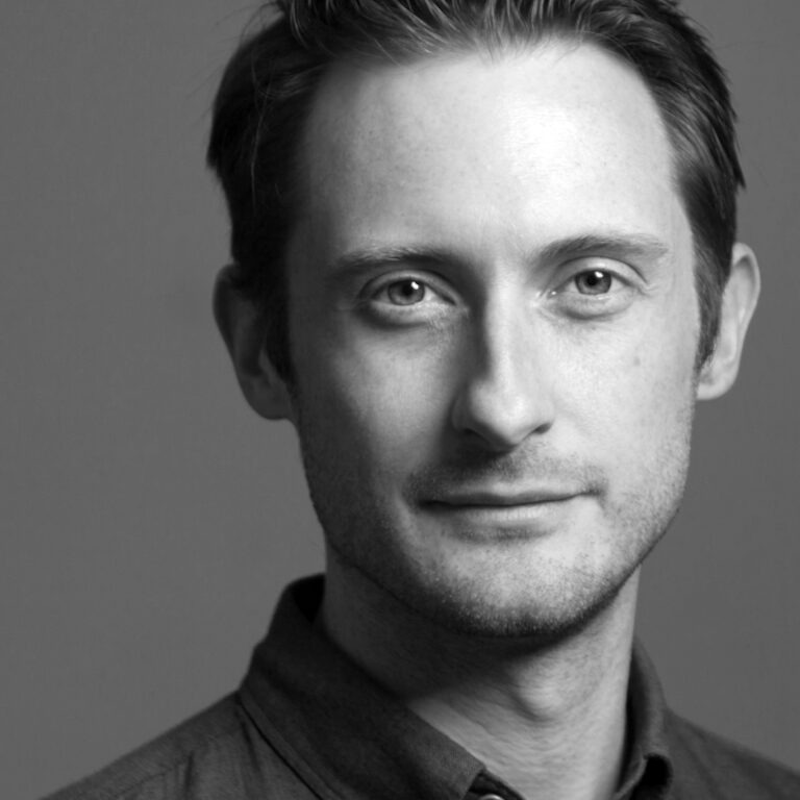
Brandon Bales (Photo courtesy of Moving Arts)
Anthony mentions how big Hollywood names attract audiences to shows they otherwise would not have seen – like Hugh Jackman in Music Man or Robert Downey Jr. in McNeal – yet a symbiotic relationship between theater and film hasn’t yet come about.
DA: So, in that way, they do help each other. So many people cut their teeth on theater and then completely forget about it. Someone can go from playwright to TV writer and there’s always the question of: “Did you kick back any of that money to the theaters that got you there?’ And sometimes they do, but never in a way that’s as meaningful as we’d want it to be.”
SR: But one wonders why there isn’t more of a symbiotic relationship seeing as so much money is made through storytelling in this city via film. Why isn’t that money coming back to the theater?
DA: Take our big theater, take CTG, why is it that Disney or Paramount or Fox are not like giving $250,000 every year or whatever every year to this institution? Right, their CEOs make – HBO guy, he made 54 million dollars. You know, it’s like – that’s one guy. Sure it’s a big job but your company could support a lot of other things with that.”
Owner of HBO, Warner Bros. Discover CEO David Zaslav made $51.9 million in 2024. After the company’s split this year, he faces a pay cut that will…wait for it…allow him to remain a top-earning CEO.
SR: Especially when people are going from theater to film, investing in theater makes sense because they will receive that talent, at least through what we’ve been discussing as far as the process they’re going through.
Editor’s Note: There have been and are instances of symbiosis between the movie/TV industry and local theater. Movie mogul Lew Wasserman was Chairman of the first Center Theatre Group Board and industry-related underwriting helped support the 99-seat Blank Theatre. The Actors’ Gang is still headed by Tim Robbins, though he created the company before he became a film star. Also, at present, both the Geffen Theatre (midsize) and IAMA Theatre Company (intimate) have industry-related underwriting, though these instances are aberrations, not a region-wide norm.

Robert Bailey performing “In Some Dark Valley” at Moving Arts, 2025 (Photo by Daniel Rashid and Avi Kaye)
SR: Besides these extraneous factors, do either of you feel as if there are norms or trends within the theater scene that may be impacting the industry’s overall health?
DA: There will always be a place for the old stories, but the [new plays] allow us to more easily talk to an audience of today. They can utilize new technologies, new subject matters, new language, and attract different audiences. We now have the opportunity to hear from people who have different perspectives than the predominately white male playwrights of the past.
New plays are more immediate. A new play can feel like it’s ripped from the headlines. A new play can be about where you are, [like the LA-focused plays written by Angelenos they produce]. I always say, ‘You want to have a universal story that is extremely specific.’ The more you zoom in on a granular community or relationship, the more universal the story becomes, the more people can relate to it.
SR: Older stories have that universal nature but, as you said, they lack the ability to empathize with new and fresh perspectives which I think is an important distinction that you’re making.
DA: Of course. The classics are classics for a reason. And even to compliment them more, people are continually deconstructing and reconstructing them in ways that fit a more modern point of view and they still hold up to that which Ithink is a testament to the strength of those stories and how well written they were.
SR: But based on the new plays that have been coming through Moving Arts – produced through Mad Labs, [their new play development program in which submissions are now open], and through your own productions the past couple of years – what are you learning about where theater is going?
DA: I wouldn’t say that all playwrights are trying to say any one particular thing but, I just worked on two plays that both speak to abuse of power – putting your faith in the wrong people, how people can get manipulated and how that can cause bad outcomes. People are looking to see themselves reflected on stage and that’s important.
BB: I think from a broader perspective there’s more immersive work happening now which is not always theater like we imagine classically but it can be powerful. A lot of people are doing interesting things in that space and pushing boundaries in that direction.
Los Angeles’s theater industry has a unique opportunity to better itself. With a rich cultural history, a plethora of eager actors and talented storytellers flocking to this city from all parts of the world, there’s no reason why LA should not stand with the likes of New York or Chicago. Perhaps the solution are initiatives to obtain the resources that already exist in this city to create new work that entices the people of this city, who already head in droves to a different kind of theater when a new movie premiers, to support places like Moving Arts. The issue is access – (1) the physical separation we experience in the landscape with rolling hills, making this vast city seem like merely a collection of separate but over-populated neighborhoods, the majority of which we only see passing by in the solitude of our cars, and (2) the immense wealth accumulated here through storytelling not going to our theater even though that is where most artists start their careers.
An offering: a better show of solidarity among artists, committing to building relationships in which we lift each other up and support each other’s success – despite the distance. Artists like Anthony and Bales recognize these opportunities to bolster the field they work in but lack the financial support to capitalize on them. They recognize that theater can play a part in Los Angeles’s future, should the city see it fit that it does so.