
Critical Thinking
A World Without Critics and the Quality of Conversation
 Imagine we live in a world where, as artists for instance, in private or in public, we hear only voices that offer us approbation and support. No more damning, damned critics, who misunderstand and misinterpret our motives, leaping to flawed conclusions, even when they imagine (the fools) that they’re being kind and supportive.
In a larger cultural frame, imagine the bliss of being unencumbered by voices that create dissonance with our most cherished convictions and beliefs: The bigots, the haters. To paraphrase a quip by the late Tom Lehrer, “There are some who do not love their fellow man, and I hate people like that!”
Imagine the bliss of the unencumbered right to be right. Imagine the tranquility where we all agree. Private disagreements are bad enough, but what’s private anymore? If they play for the other team, unfriend those hate-mongers; perhaps if we don’t hear them, they won’t exist; Let’s cover our ears. Marginalize them. Marginalize ourselves. And if we can’t do that, then silence them. To quote an old song by Pete Seeger, spiritually at least, we live in “little boxes, on the hillside, little boxes, made of ticky-tacky.”
But then these critics spew their toxins online, and we hear about it, denting our tranquility, our ever-so-fragile sense of worth. Sometimes they’re vicious and venal, these detractors, and sometimes they’re performing a dance of friendship and support. Sometimes they’re just exhausting. Critics! Who needs them?
Imagine a world where marketing departments have the last word, void of criticism, where the narrative is controlled and unquestioned, as in George Orwell’s 1984, but with the aim of selling their products, maximizing their profits, or, in the arts, with the aim of simply remaining in business.
Reality check: We’re getting there swiftly, thanks to old culprits and new.
Let’s start with the erosion of critical thinking in public education leading to “the unexamined life,” blind to contradictions and hypocrisies. In one “little box,” the “right to life” movement is tethered to support for the death penalty. A Super Bowl halftime show, with a Puerto Rican headliner, leads with the anthem: “The only thing more powerful than hate is love.” That becomes labeled by Fox News pundits as divisive. Meanwhile, deep, underlying veins of bigotry give that argument the illusion of credence for those dwelling in their private Idaho.
In another little box, ideals of social equity are fueled by identity politics, where everyone is defined, included or excluded by their race, where people of all races are held responsible for the actions and/or persecutions of people of the same race whom they’ve never met, never knew, or who lived some two centuries ago, or longer. In an alternate box are masked federal goon squads that nab people off the streets, without judicial warrants, without the right to consult an attorney, and hold them in detention without access to medicine or contact with the outside world. Their actual crime? They looked like they may have been criminal because of their dialect or skin color, or because they were taking cellphone photos, or blowing whistles to warn their neighbors, or because they were just there. All of this is just fine with about one third of the U.S. population
Or, in the case of a nurse legally protesting ICE while in legal possession of a firearm, where that possession becomes a rationalization by federal authorities for shooting him ten times in the back, killing him instantly; in the blink of an eye (from all that pepper spray), progressives suddenly become advocates for the Second Amendment, occupying the same land with the NRA. The logic all twists back on itself, into a kind of gordian knot.
In yet another little box, without an iota of investigation, a professional theater in Rhode Island cancels a production by this country’s most produced living playwright because of this playwright’s alleged, unproven association with a pedophile whom the playwright has never even met, let alone colluded with. And this theater is ostensibly a beacon of the arts, of enlightenment.
How did our reasoning become so convoluted? How did our fantasies and our reactions become so reactive and vicious?
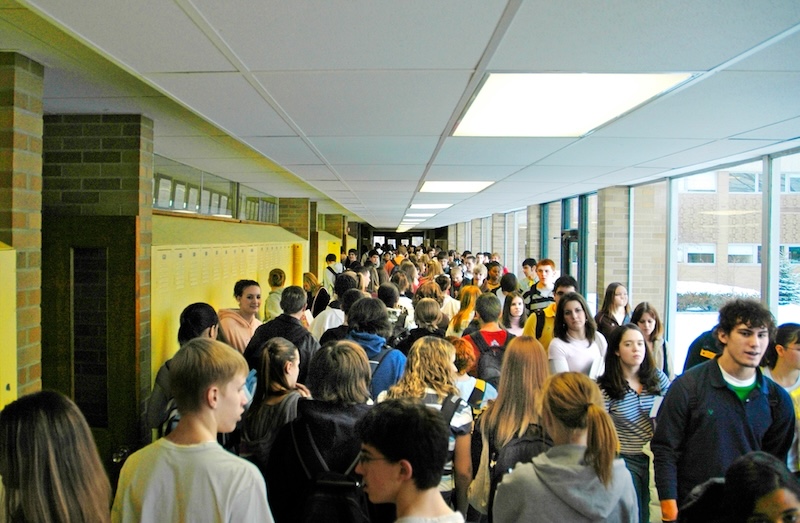
According to Helen E. Bouyegues, writing in Forbes, “In many states, students cannot move on to high school if they fail state exams in eighth grade. And things such as teacher pay, school funding and other ‘high-stakes’ accountability measures often hinge on student performance in that grade. This pressure forces schools and teachers to focus on preparing their eighth graders for state exams in lieu of a more well-rounded educational experience. Indeed, our 2020 survey of teachers revealed that 55 percent believed that the emphasis on standardized testing made it more difficult to incorporate critical thinking instruction in their classrooms.”
Yet, the arts are, on occasion, a beacon of critical thinking, where dissent finds its voice. Is it merely coincidental that middle and high schools are cutting back their arts programs? Moving up the food chain, between 2012 and 2020, colleges and universities saw a precipitous 30% decline in humanities, pure science, and service field majors, and that trend continued through 2025.
Plus it’s no secret how the tech bros are maximizing their profits by sending us into our “little boxes” – seemingly of our own making, but actually of theirs.
The final ingredient – and here’s where we home in on the art of criticism, and the criticism of art – is the disappearance of newspapers here and abroad. Writes Sarabeth Berman (Chief Executive of The American Journalism Project) in The New York Times, January 2026, “Since 2005, more than 3,500 newspapers have shuttered. On average, two close every week.”
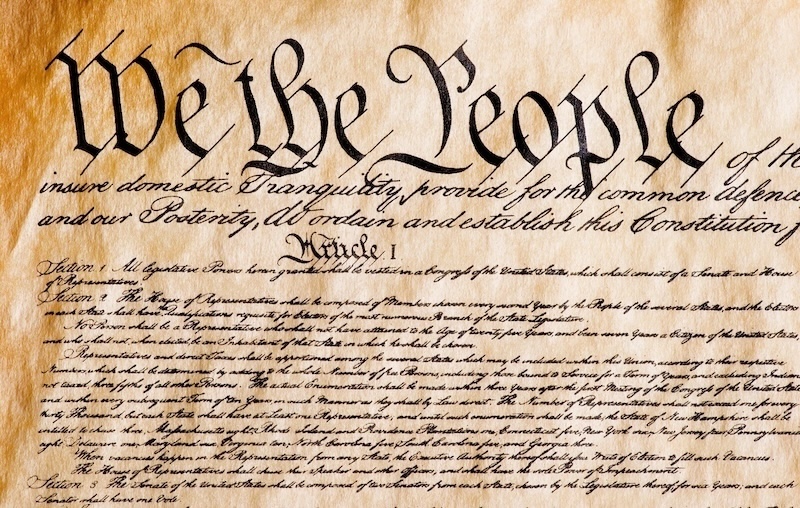
Keep in mind that “the press” is the one form of speech specified in the U.S. Constitution as worthy of protection from government meddling. After their, let’s say unpleasant experience with 18th century British colonialism (which bears a striking resemblance to our current federal administration) this nation’s founders understood that holding the government accountable through investigation and — here it comes – criticism – is what keeps a democracy vibrant. This would include the right to object, and to express that objection. This would be not just the right to criticize, but the imperative to do so; for a range of reasons, from “the pursuit of truth” through the quality of conversation, and as part of the glue that binds a community, not in lockstep, but in shared values, arrived at through argumentation and discourse.
To be clear, a provable lie does not qualify as free speech. Our court system has a mountain range of litigation on this. A provable lie spiked with malice can be rightly prosecuted as defamation. A provable lie printed or posted with malice can be rightly prosecuted as libel. Malicious, provable lies, and the right to spout them, are not what I’m defending here.
But I would go so far as to posit that criticism, as difficult and painful and hurtful as it so often is, helps keep us on track, even civilized. And the stifling of it, the strategy of isolating it into niche compartments, the impulse to define CNN and the New York Times as “enemies of the people” and to push them out of the White House briefing room — this may not be illegal, but it is part of a steady slog towards barbarism. If you think free speech is messy and often irresponsible, ill-informed, grounded in quicksand fronted as logic, and often hateful, all of which is partly true, imagine what speech would look like if it weren’t free. Our civic discourse would be a propaganda machine, an ongoing press conference in which Karoline Leavitt, Pam Bondi, Stephen Miller, and Kristi Noem won’t stop talking.
The widely press-covered protests of ICE across the country have demonstrated that we’re not entirely there yet.
There’s also a silver lining to the disappearance of local newspapers.
From Sarabeth Berman in the New York Times
“Hundreds of nonprofit local news organizations have sprung up, from Lafayette, La., to New Bedford, Mass., to Chicago. Rather than relying primarily on advertising revenue, nonprofit newsrooms are sustained by coalitions of philanthropic institutions, local businesses, individual donors and readers. Under this model, local journalism is treated as a public good, essential to civic life, akin to a museum or a food bank. . . Many of these nonprofits started within the past decade. They operate where audiences can be most easily found today: online and in email inboxes. There’s less focus on print and newsstands.”
Stage Raw falls into that category. Initially created as a non-profit with a fiscal receiver, to compensate for the cutbacks in arts journalism across Southern California, the outlet has found it more practical to register with the state and federal governments as an LLC and support itself with a combination of sponsorships, subscriptions and advertising.

Stage Raw is not alone in its ambition to keep conversation about local theater flowing. Other digital platforms (in no order of priority) with teams of writers include Backstage SoCal (based in Orange County),laexcites.com, The San Diego Union Tribune’s free digital arts blog, TheatreinLA.com, Broadway World (Los Angeles/San Diego), TheatreMania.com (which has a global reach with bases in New York and London), LA Times Entertainment Arts (which has a firewall), and Gia on the Move.
Veering somewhat away from the impulse to doomscroll, since 2023, Stage Raw has surpassed the metrics of its ancestor, the digital L.A. Weekly’s Theater section, when that newspaper was in its heyday in the early 21stcentury. This all means that there continues to be a palpable interest in arts criticism and commentary in Southern California, the difference being that in the newspapers of yore, the arts were literally folded into coverage of broader entertainments, sports, local national and international news. Now they’re in their own little box, as though the theater has little to do with politics, or sports. This is an artificial segregation and I’m not sure that this anti-holistic framing best serves the sector or helps us see the larger shapes of behavior that link actors on a local stage to actors on the world stage.
What remains timeless, however, are thin-skinned responses to reviews that are even partly critical of local productions. When he was theater editor at the L.A. Weekly, my colleague, Steven Mikulan, had a file drawer labeled “hate mail.”
Perhaps it’s because we’re so segregated from the rest of the culture that some theater administrators, and even artists, believe that the press is an extension of their marketing departments. In the past 12 months alone, one advertiser hinted that they wanted a refund after receiving a mixed review. I tried to explain the difference between advertising and editorial. A different playwright-producer threatened to sue us (for encroachment of his business) if we didn’t take down a mixed assessment of his play. (California, among many states, has an “Anti SLAPP” law that makes it a criminal offense for companies to use the court system to suppress free speech as exercised in product reviews.) After receiving reviews they didn’t adore, countless producers have sent me copies of positive reviews they received from other outlets, to prove that our guy was wrong, or that somebody else understood or felt their play more deeply.
Yet the theater, among its many devices, includes the art of perception — that one audience member or critic, based on their own backgrounds and predilections, may receive a play very differently from the person sitting next to them. They may defend or oppose it for completely different, autobiographical reasons. Audiences and critics are not a herd. And criticism is not the same thing as marketing.
I’m also a playwright, so I empathize with the plight of being misunderstood. When I was in my 20s, a critic from the Los Angeles Times reviewed my first professionally produced play that had received very positive notices in Northern California. “The play was unendurable,” he wrote, “and the actress wasn’t able to do anything with it.” I will carry that line to my grave, and will not permit that kind of contemptuousness on Stage Raw. That said, if I get one positive review from somebody who’s not one of my friends or family, I take it as a kind of miracle — that somebody out there, in the public, received my play in the spirit it was intended. One learns with age, or should learn, not to seethe over dissenting opinions. In the long run, they’re not only part of civic discourse but ultimately part of what makes life so provocative. (That’s a hard argument to embrace when you’re exhausted from the Herculean task of having put up a show, and waiting for the reviews to come in.)
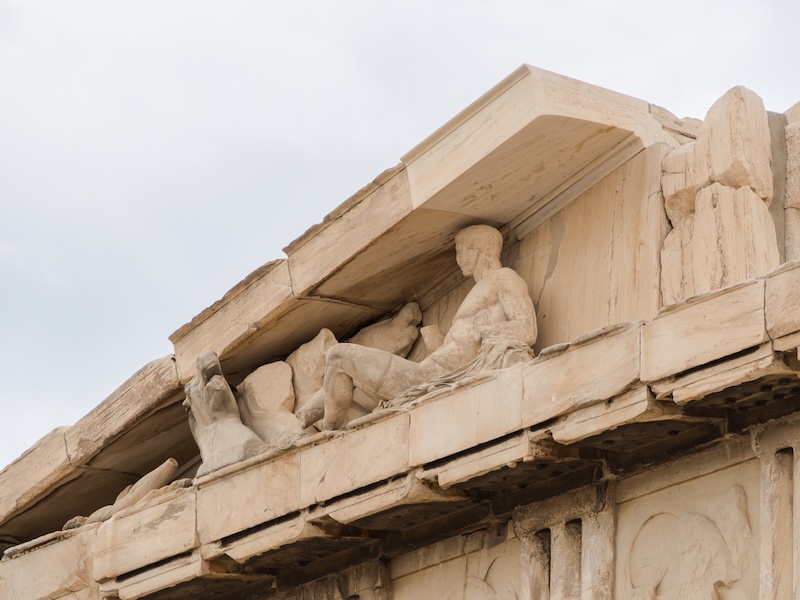
All this crap began, at least in terms of written plays, with the ancient Greeks. As described by Aristotle in Poetics the prevalent aim in that era was to have characters bring opposing views into public discourse. And in that conflict among characters, that tension, wherein each opposing perspective has validity, deeper understandings would emerge. Conundrums. Paradoxes. Tragedies. The ancient Greeks were pagans. Their form of government was representative democracy. Their views of theater and of governance are tethered to the art of debate, which moves both the theater and democracy forward.
Then (after the Romans) came the medieval Christians. Their theater was tied to the Bible, to worship, and to rigid delineations of right and wrong as a means of accessing Heaven, or burning in hell. Their governments were theocracies, brutally so. And their theater was a kind of marketing department for those governments and their theocracies.
So the issue hanging in the balance between these two models is where we’re going to land, in our civics and in our arts. Are we to be an army marching in lockstep under the orders of some quasi-divine marketing department or some power-driven plutocrats trying to sell us their shit, or are we to be a culture of free thinkers: argumentative, passionate, angry, respectful, while squabbling our way towards some kind of light?