


Inspiring Those Once Left Behind
High School Theater Teacher Eddie Ruiz Encourages New Generations to Take Center Stage
By Mar Mar Hernandez
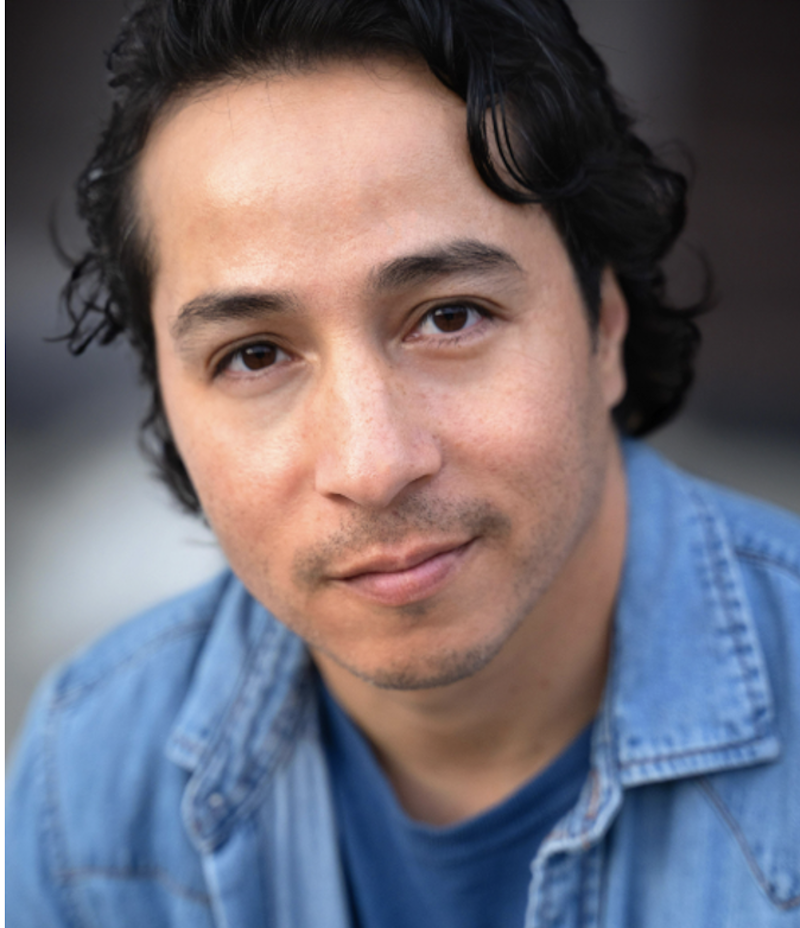
Eddie Ruiz, Theater Teacher at Los Angeles County High School for the Arts
This Interview is Part of the Stage Raw Unusual Suspects Youth Journalism Fellowship
The summer I was seven years old, I made the mistake of getting a bob haircut. It was my first haircut, the drastic switch from waist-length to ear-length startling my mother every now and then. I insisted that I liked my hair, the way it was styled, it made me feel like I could express myself in a way I hadn’t been able to before. I didn’t feel the full force of my actions until I went back to school in the fall. I involuntarily adopted the nickname Dora, as in Dora the Explorer. Don’t get me wrong, Dora was one of my favorite childhood shows. However, under the new context of my non-Latino classmates calling me this nickname, it felt derogatory, and my love for Dora, and my hair, faded. I couldn’t put my finger on why I felt so insulted, until I spoke with other Latinas who had the same haircuts around the same time in their lives. I realized that it wasn’t a rare occurrence, that brown girls with bobs would always be associated with Dora. As a child, I wasn’t used to seeing much representation in the media I consumed; the books I read, the movies I watched, I wasn’t familiar with many programs, even for adults, that included brown people without the storyline being centered on their skin color. This thought hadn’t escaped my mind, even when I began attending a performing arts high school. If the media lacked representation then, how would anything change now?
My outlook changed after meeting Eddie Ruiz, my junior year acting teacher. He was the artist who made me realize that people of color have a place, a necessity, to be featured in entertainment. Eddie, between casting decisions and devising monologues centered on social injustice, believes that representation in the media starts in the classroom.
From humble beginnings growing up in Boyle Heights with immigrant parents, he found his passion to perform in high school, leading to a BA in Acting from California State University, Fullerton and his MFA in Acting from The Central School For Speech and Drama in London. Now residing in Los Angeles, he is a versatile artist with experience in acting, directing, writing, and producing for the stage and screen. When he’s not actively advocating for artists of color, you can find him in the classroom as a third year acting teacher at the Los Angeles County High School for the Arts, creating meaningful, lasting connections among his students.
STAGE RAW: All right, I think we’ll start at the very beginning, specifically on who or what inspired you to pursue a career in theater.
Eddie Ruiz: My [parents] are both very artistic. My dad is one of the biggest storytellers. He’s a self-made man who immigrated from Mexico. Crossed the border with a coyote. And then he met my mom, and . . . [they] had so many stories. So the inspiration came from “Why are we not telling these stories?” But really I was inspired in high school. I was okay at sports, and then I watched The Outsiders. I said, “This is what I want to do for the rest of my life.” But I never knew how to do it. It wasn’t until I got into college that my career transitioned from sports into theater acting. I had a teacher that asked me to be part of a show, [he] introduced me to an acting coach. That coach then introduced me to an agent, which ended up landing me a quick role on That’s So Raven. I’ll never forget that feeling of, “This is what I want, this is right here. This feels home.”
SR: On the topic of making your career feel like home, can you explain how you try to create that same environment in the classroom?
ER: By the material I bring in, by the way I run the spaces, [I do it] to make sure that everyone is being seen, that everyone is being heard. You come into my space with a clean slate. I also try to understand your experiences. I’m trying to come from a place of compassion. Whenever I speak to the kids that are non-BIPOC, they are cheering for [their BIPOC classmates] for the most part. But I think if kids maybe aren’t up to par and they happen to be of a marginalized community, what are we doing as a school to get them to be able to compete with those that [have] resources, and allow them to take risks and fail on stage . . . versus not taking risks and playing it safe? I’m very proud to say that all the kids that I coached, all the kids that I helped get letters of recommendation or scholarships, the majority of them were very successful, and most of them were BIPOC kids.
SR: When faced with discrimination and/or discouragement, even in a usually welcoming environment, such as being told you shouldn’t try for a role because you’re of a certain ethnicity or skin tone, how do you recognize the fact that it happens, rather than push away the fact that it happens? How do you acknowledge the occurrence and not only move forward, but push through in the midst of all that?
ER: Sadly, [I know] that these things can occur in our business. I was doing a commercial for Jack in the Box. It was with Jack, and it’s me and this actor, and I’m doing both the English and Spanish market. But before we finished the English market, the director, who was non-BIPOC, came and said “Hey, can we try one more version? I want you to try one with an East LA accent.” And I remember just me and my beautiful friend just looking at each other, like when is the butt of this joke gonna end, or, like, is this a real thing?
I’ll never forget, [my friend] who had no lines–and here’s where I think ally-ship comes together–I remember him stepping up and being like, “nah, we’re not doing that.” Because he’s been in the business a lot longer than I have, right? So, at that point I’m like, if I say no, do I lose this job? Is this commercial done? Do I get fired? All these thoughts are going through my head while he just steps up and [tells me] “Just do the bit like we’d been doing it. And if they don’t like it, they won’t use it.” I remember just telling myself to breathe. You don’t want to lose your cool, especially when you’re raised in an environment of survival. So I think that community is important, checking when that happens, not only what you’re doing for yourself, but when you see someone else, it’s as important as watching someone get robbed. You have to ask yourself what you are doing to help that individual and be able to say “I see that you don’t want to do this, and that’s okay. You don’t have to do it.”
 SR: On the topic of students, you mentioned earlier that teaching not only allows you to pay the bills while you’re not acting, but it also allows you to continue uplifting the kids you teach. For my final question, I don’t want to ask “What you get out of being a teacher,” but I want to know why exactly you do what you do and why you do it all for us?
ER: Well, it’s a way of giving back to the community. When I first started teaching, it wasn’t me saying “I’m not going to teach”; It was more of that imposter syndrome of “Who am I to teach?” Even with everything I’ve done with my career, I still feel that way. I remember thinking, “Am I really the person that these kids should be learning from?” But because I came from teaching in juvenile halls, in camps, it changed my perspective of the power of art, and what it can do in healing, in one conversation.
So then, when I came here to LACHSA, it only got easier because of this hunger and desire. But I’ll tell you, in full transparency, what really keeps me at LACHSA and excites me every day to come to this classroom are all my BIPOC kids. I see them as a reflection of me, and that excites me. Once again, not in any form alienating any of my other students, but it excites me to uplift you all together and to know that you all have a voice, not just in the area of art, but also in growing up. So I show up every day with passion, responsibility, and accountability, hoping that my students can realize that whatever dreams they have are possible, and there’s nothing or no one that could take that away. Also understanding the reality of what even why we’re having this conversation, understanding there are going to be bumps along the way, whether race-related, financially, family-related; sometimes understanding the culture of the arts is so difficult that we have to overexplain it.
So when it comes to teaching, I show up every day because of that, because I love seeing you all grow, and I love seeing that reflection of me asking myself what [would’ve happened] if I had this when I was your age. I could just be at home receiving my residual checks and my writing checks, I do this because I love it, and because I can, and because I hope it’s changing lives. As cliche as that sounds, I think when you find love for it, and you all start to connect, that’s when I know I’ve done my job. It excites me to know how smart, intricate, and curious you all are to make sure that you’re being seen and being uplifted, no matter who you are.