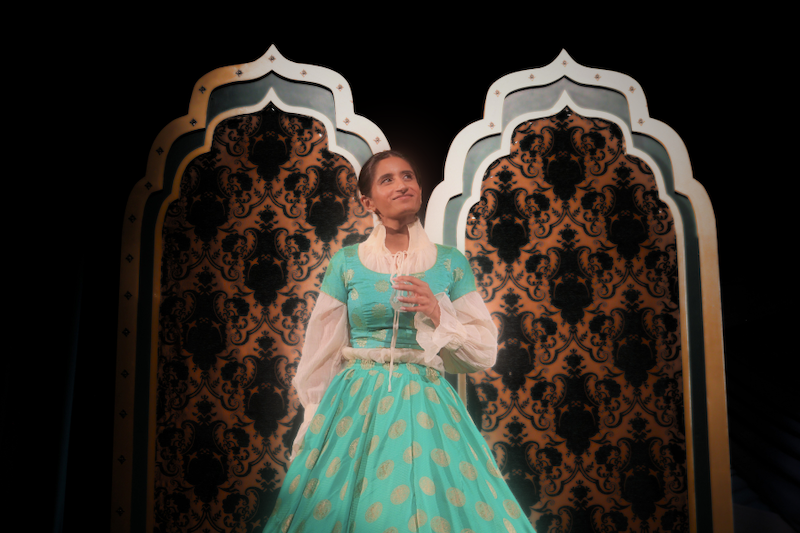

Arasha in Jaclyn Backhaus’ “Wives,” at East West Players, co-produced with Hypokrit Live Arts. (Photo by Daniel Antonio Vallejo)
Writing about Misogyny and Racism in an Era of Social Backsliding
Jaclyn Backhaus on her play, Wives
By Liberty Chao
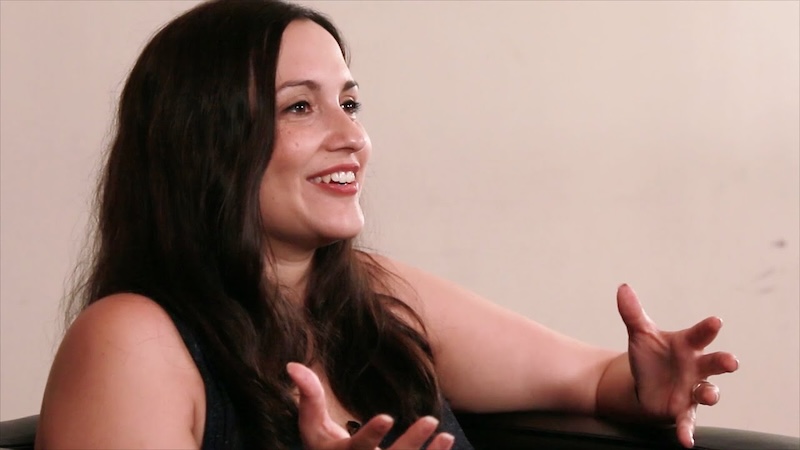
Jaclyn Backhaus (Photo courtesy of the subject)
This interview is part of the Stage Raw/Unusual Suspects Youth Journalism Fellowship
What would happen if three wives of “great men” gathered together to foster their own narratives outside of the patriarchy? Highlighting female experiences across 16th century France, 1960s Idaho, and 1920s India, Wives aims to remind audience members that history is made by more than just a few prominent, male key players. Stage Raw spoke with playwright Jaclyn Backhaus to learn about her inspiration and process for this blend of time travel, comedy, and female solidarity.
Jaclyn Backhaus: When I started writing this piece, it existed as three separate ideas for plays, based on characters who intrigued me or my own travels. Specifically, I’m thinking of the Palace in Jaipur, which is Act 3, and the castle in Act 1, Chenonceau. Both of those places had amazing stories about the way the space was broken down to masculine or feminine spaces. I became really intrigued by this history of spaces where women had access; spaces where men had access; the power dynamics and disparities between them.
I started writing Act 1 and Act 3 as separate plays. Act 2 was another play about Ernest Hemingway and his wives. I always work on two to three projects at the same time, and I started to realize there was a very similar question at the center of all of them. For women who have long been orbiting these central characters —who are often men — what does it mean for them to step into the center and claim their own identity? When I realized there was a similar schematic across all three, I hypothesized, “Wouldn’t it be cool if we allowed the same play to function and move through all three of those spaces”? After putting them together, I wrote Act 4, which is a little bit more of my own process as a writer, looking at these pieces and wondering where I fit in as a woman.
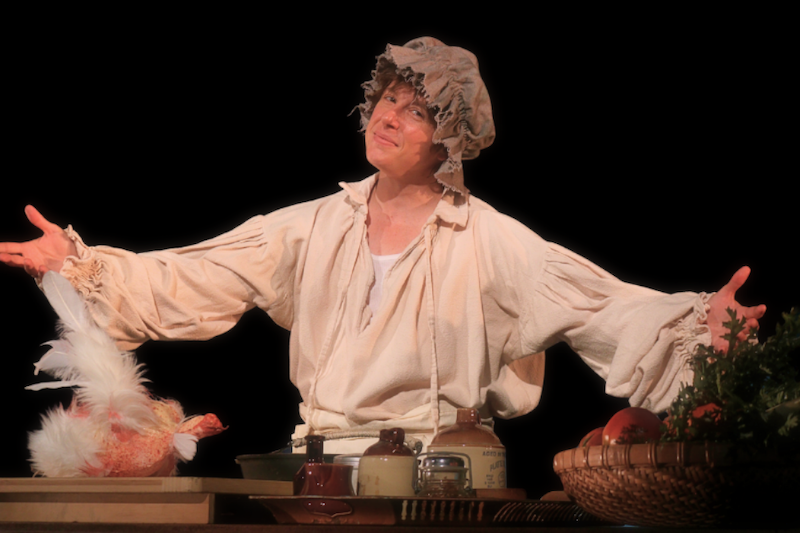
E.M. Davis in “Wives” (Photo by Daniel Antonio Vallejo)
Stage Raw: The four-person cast for Wives directed by Arpita Mukherjee, is predominantly Asian American, reflecting EWP’s mission statement and your casting specifications. With this piece, you have an Asian interacting with an American and a French person, as well as some of your own family experiences through your grandparents’ immigration story. So I am wondering, are there other parts of your Asian American identity outside of your family history, maybe themes or motifs from your own experiences influencing the other parts of the narrative?
JB: Yeah, I think there was always this understanding when I was growing up that stories that had Asian Americans at the center had to be stories about their identity or about family history, about the immigration story. While I identified with those pieces and loved them and cherished them — and they, oftentimes, are the pieces that changed my life and made me want to become a writer — there’s so much more to my experience of the world than just the experience of my identity. When I was coming up with the schematic for this piece, knowing that there were parts that moved through Asian historical experiences and some parts that classically, characters who were not Asian are featured in, I was like: I think it would be a wonderful thought experiment for us to be able to inhabit the mythic writer, the French king, the French courtesan, and say, you know what? That’s just who we’re going to be at this moment. Something about playing this part exhibits a facet of our experience of the world.
SR: That’s so neat you prioritize that. I’m reminded of when I was younger; being told by some of my white peers, “if you want to dress up as a princess, you can only be Mulan.”
Wives is described as a “funny, ferocious, long overdue celebration” by New York Magazine: adjectives that do not typically describe pieces exposing bitter effects of gender roles, patriarchy, and even unhappy marriages. Do you have a specific process/method when it comes to balancing humor against the harder-hitting themes?
JB: When I’m starting out with a new piece, I follow my own impulses toward “How can I find joy in the writing of this?” What that means is even if I’m hitting really intense subject matter, I’m always looking for the script to hold places for the actors to breathe; places to find levity and lightness.
When I’ve moved through some of the hard aspects of my life, there are moments of supreme absurdity; things that you have to laugh at; things that feel like they are tipping the scales back toward a joyful balance. I will always incorporate research and structure to hold everything for the central theme to land and be grounded. But I trust the process in leading with joy; looking for my own delight inside the piece, toward the biggest questions I have.
Leaving room for that curiosity will allow the process to roll out without having to plan too much. Any artist who is at the ready, trying to make things — we don’t always know what the thing is going to be. So I try to trust my process and my impulses to carry me through, to learn what the piece wants to be as I write it.
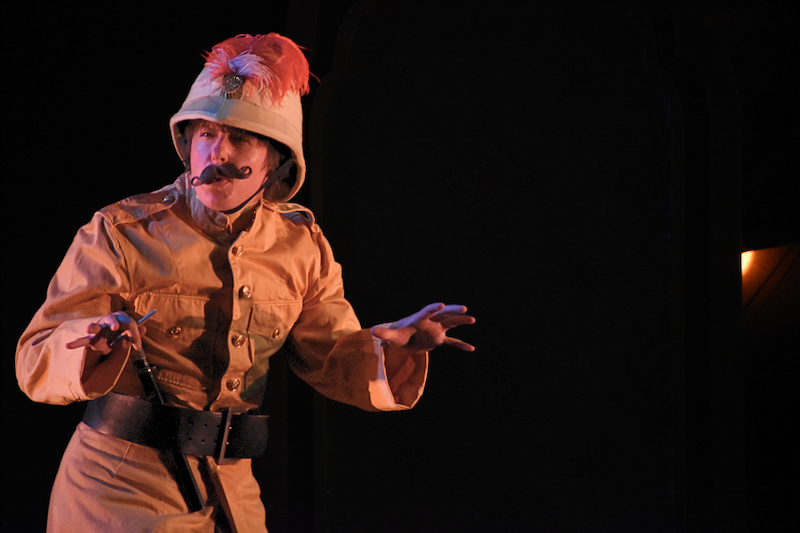
E.M. Davis i(Photo by Ximón Wood)
SR: And thinking about how, as Asian Americans, as women in society, we are constantly running into patriarchy or racism in effect – are there instances where after the show audience members have come up to you and said, “that’s something that I’ve experienced, that’s something I’ve seen,” or an instance where maybe you wrote in something that someone close to you said?
JB: Yeah, a large part is about a young writer trying to figure out who she is and how she wants to situate herself in the world. So much of that advice the other characters offer mirror the things that my friends and family have offered me through the years. Guideposts to hang my hat on, mantras to rely on, words of encouragement. There was a moment when I had my family come to see the play and they told me afterward, they recognized some advice they had said; like “oh, you got that part right”. And there’ve been a couple of friends who felt really seen by the way that the play lands, and who I remember texting me after, saying that the whole thing mirrored their experience, of stewarding your own personal value system in a world that continually shows it doesn’t value you. There’s something alchemical at work: if someone’s experienced that, if they’ve tried to work through that in their lives, I feel like there’s potential for them to see themselves in the piece. Even if they’re not necessarily someone who gave me a direct quote.
SR: The premiere of Wives was in 2019, and just thinking about all those years — so many things have transpired in our country since. Are there parts of the piece that you think will hit harder now that we are living in a world where free speech is, well, limited…
JB: Decimated.
SR: Yeah. As we are seeing these racist, xenophobic structures returning and plaguing the community — is there something that you think will affect audiences more or stand out more than it did in 2019?
JB: Ultimately, the fact that there are so many people who should be able to have the opportunity that the character in Act 4 is afforded: a space in which they can unequivocally explore their understanding of their role in the world. We’re limiting that ability for so many people, whether it’s because of genocide, or deportation, or the loss of civil rights. That part becomes very moving to me specifically because in a metaphysical sense, it is about other people supporting and stewarding someone’s individual journey through that experience. And to me, that hits hard: that we can’t do anything if we’re not there for each other.
Much more so than in 2019, we need to be galvanized to figure out ways that we can support each other — not just in matters of affirming a young artist, but in matters of affirming someone’s right to continue staying in this country, someone’s right to their land. I think there’s a big open question of how much of this play will resonate differently: whether the moments head-on confronting imperialism and colonialism will feel different, whether there are moments of comedy that will feel different, all of that feels like a live question. One of the reasons that theater is so amazing is that a play can hit different points, and I’m really excited to learn about how this play will hit at this moment in history.
Wives is being performed at East West Players, David Henry Hwang Theatre, 120 Judge John Aiso St., downtown LA; Thurs.-Sat., 8 pm, Sun., 5 pm; thru Nov. 1. www.eastwestplayers.org/wives