
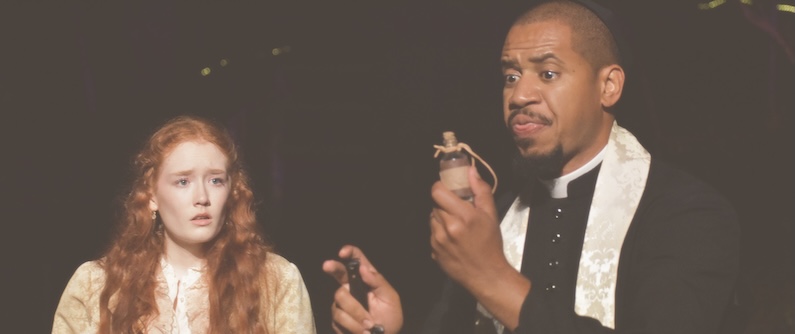
Quinnlyn Scheppner and Max Lawrence (Photo by Ian Flanders)
Reviewed by Martín Hernández
Theatricum Botanicum
Through September 26
RECOMMENDED
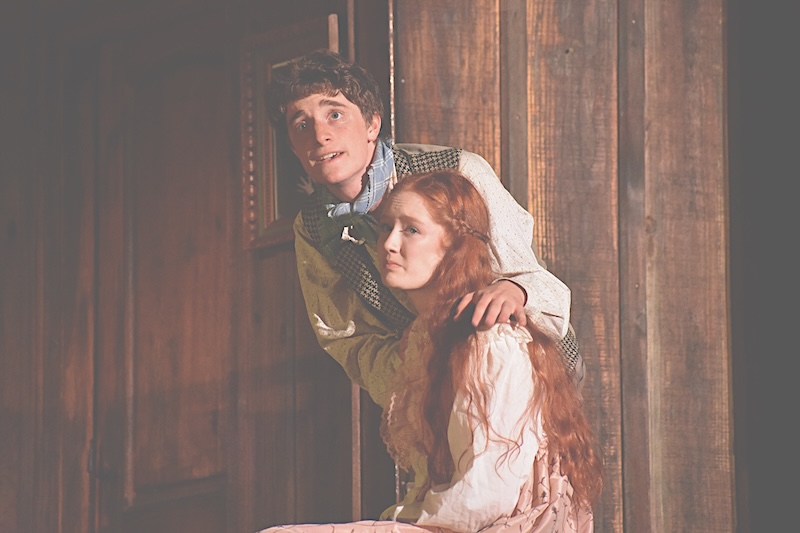
Asher Hagler and Quinnlyn Scheppner (Photo by Ian Flanders)
Ellen Geer’s adaptation of William Shakepeare’s tragic love story seeks to highlight the class contradictions between rich and poor. The story is transposed from Renaissance-era Italy to 1885’s Gilded Age in New York City: The Montagues are now the working class Mulligans and the Capulets are the filthy rich Callahans. The longstanding feud between these two Irish American families is emblematic of the class warfare of the era. (However, considering that our current epoch has spewed out a U.S. president enamored of gold toilets, “Robber Barons” of the tech bro ilk, and even its first trillionaire, a more contemporary interpretation could have been more stinging.)
When teenagers Romeo Mulligan (Asher Hagler) and Juliet Callahan (Quinnlyn Scheppner) fall in love at first sight, they reject their families’ bitter clash. Juliet’s fiery cousin Tybalt (David Benne), incensed at Romeo’s wooing of Juliet, challenges him to a duel. Romeo balks, however, sensing a kinship with Tybalt due to his bond with Juliet. Enraged at Tybalt’s arrogance and Romeo’s presumed cowardice, Romeo’s best friend Mercutio (Rhett Curry) takes up the contest instead. Tybalt kills Mercutio and a vengeful and remorseful Romeo slays Tybalt. Banished from Manhattan under penalty of death, Romeo must find a way to reconnect with Juliet and live happily ever after. Ah, the folly of youth.
Juliet’s father, Callahan (Jon Sprik), epitomizes the psychopathology of capitalism and patriarchy. He’s a smiling tycoon in public but, behind closed doors, a brutal thug with his minions, especially Juliet. When Juliet refuses his demand that she marry rich dilettante Paris (Ethan Haslam), Callhan reverts to the unseemly tactics of an abusive father.
Geer’s script changes add some contemporary flourishes, referencing such wealthy capitalists as J.D Rockefeller and Jay Gould as invited guests at a festive Callahan ball and making cunning swipes at New Jersey (as New Yorkers are wont to do). Curry skillfully balances humor and ire as Mercutio, making ribald jest of Juliet’s Nurse (Geer) yet seething in his dealings with Tybalt. Geer’s Nurse also shines; she’s admiring of Romeo’s good looks – “He’s a corker” she reports to Juliet – but she also describes the Montagues as “radicals and agitators.”
Teenagers Hagler and Scheppner make a sparkling couple, their commitment to the dialogue, coupled with a youthful exuberance, belying the fate of their characters. Under Willow Geer’s direction, they pull off the famed balcony scene and their individual monologues extolling their respective lovers with dexterity and wit Geer’s sublime staging utilizes the vast expanse of the Theatricum, utilizing not only such multi-level spaces on the stage as Juliet’s balcony and a modest chapel, but also the venue’s aisles. as well as the areas behind and adjacent to the seating.
As director, Geer does lean to the histrionic in other scenes, with performers shouting their lines when more thoughtful and subdued deliveries would have sufficed. For example, Max Lawrence’s otherwise compassionate turn as Father Lawrence in aid of the young lovers’ plight is undercut at times by melodramatic rantings. The same occurs at times with Hagler and Scheppner — but then again, don’t young people deserve to express their fury at selfish and greedy adults who uphold a society that puts their future in harm’s way?
Theatricum Botanicum,1419 N Topanga Canyon Blvd, Topanga; in repertory, check website for perfs and ticketing; running time: Two hours including one intermission. https://theatricum.com/romeo-and-juliet/