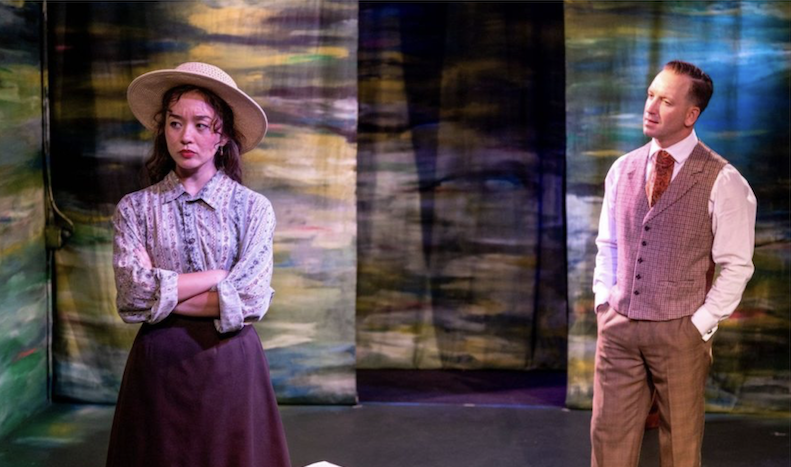


All photos by Phil Class
Reviewed by Zoe O’Brien
Pacific Resident Theater
Through November 15th
RECOMMENDED
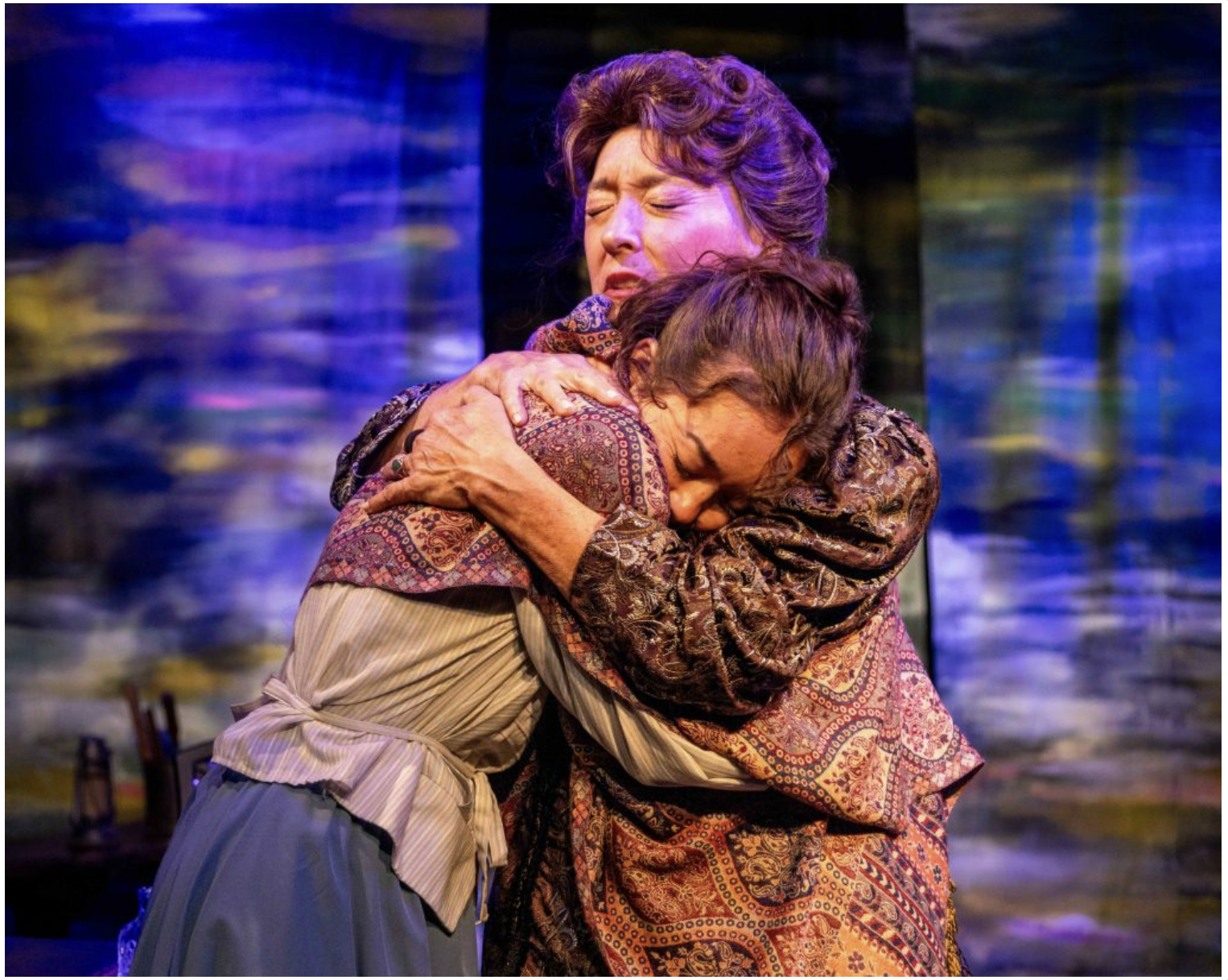
Real life mother and daughter: Nell Murphy and Cyndy Fujikawa (Photo by Phil Class)
This review is part of the Stage Raw/Unusual Suspects Youth Journalism Program
Written by George Bernard Shaw, Mrs. Warren’s Profession centers around the reunion of the independent and well-educated Vivie Warren, and her eccentric mother Mrs. Warren. Vivie and Mrs. Warren have contrasting beliefs on work, gender norms, and familial obligations, and when Mrs. Warren’s career as a brothel owner surfaces, their relationship is challenged.
Above all else, Mrs. Warren’s Profession is an exploration of what it means to be a mother and daughter. Before the story unravels into one about social conventions, and existing in the workforce as a woman, it serves as a complete autopsy of the mother–daughter relationship. Shaw reveals that despite any differences or distance, a mother and daughter will always affect each other, and remain foundational to each other’s development.
Establishing, and honoring this tense, yet devoted relationship is what the Pacific Resident Theater excels at in their production of Mrs. Warren’s Profession.
The relationship between Vivie Warren and Mrs. Warren is paradoxical. While Vivie Warren exudes annoyance and judgement towards her mother, she is also able to find a strong sense of loyalty towards Mrs. Warren, as well as love. Although the circumstances within Mrs. Warren’s Profession heighten the relationship between a mother and daughter, boiled down, Vivie and Mrs. Warren’s story is a thesis of what the mother–daughter relationship means. Ultimately, the mother-daughter relationship is one you can attempt to disregard, yet at the end of the day, intrinsic similarity makes disloyalty, and reluctance difficult.
Consequently, it is crucial to portray their relationship authentically. The Pacific Resident Theatre’s production, however, was able to execute this authentic portrayal with their casting decisions.
Actress Nell Murphy and her real-life mother, Cyndy Fujikawa, play the roles of Vivie and her mother, Mrs. Warren. By having a real-life mother and daughter tackle the complicated relationship these characters share, their bond succeeds in pushing the story forward and shines within the larger production.
Not only does the casting create a feeling of authenticity that grounds the show, but Fujikawa’s performance acts as a driving force behind the play’s more emotional scenes. Fujikawa delivers a deliberate, strong and sincere performance. Specifically, in the last scene, her declaration of the importance of a mother to her daughter, and the necessity of their presence in each other’s lives, is particularly heartbreaking.
While Fujikawa’s performance serves as the driving force behind the play’s more emotional scenes, she was matched by Stuart W. Howard, who plays the role of Praed. A long-time friend of Mrs. Warren, Praed is one of the more amiable characters in the play. Howard excelled at connecting with the other actors, and through his genuine performance, became an anchor for the audience. As the audience witnessed the tumultuous plot unfold around them, so did Praed, and Howards’s loveable portrayal of Praed allowed this to happen.
Despite having limited space, and a relatively small set, the performances of Howard and Fujikawa are able to immerse audiences within the story. Ultimately, it is the performances, and honest connection that exist within this production, that allow it to succeed.
Pacific Resident Theater, 703 Venice Blvd, Venice; Thurs.-Fri., 8 pm; mats Fri-Sun., 3 pm; thru Nov. 15. Run time 2 hours and 10 minutes with one intermission. https://pacificresidenttheatre.or