
A Path Forward
As Suggested by a Theater Teacher at Los Angeles County High School for the Arts
By Avery Eletto

Devon Armstrong teaches at the Los Angeles County High School for the Arts (Photo, courtesy of Devon Armstrong)
This article is part of the Stage Raw/Unusual Suspects Youth Journalism Fellowship
The Bureau of Labor Statistics states that there are roughly 57,000 jobs in the United States currently employing actors in theater. Nature Communications, a research organization, estimates that 90% of actors will be out of work at any given moment. Still, Gen Z has a thirst for stage and screen, gunning for these jobs. I speak from experience as a student at the Los Angeles County High School for the Arts. A teacher of mine, Devon Armstrong, is a prime role model for how to be employed in show business. He is not only working as a LACHSA teacher, but founded the Downtown Repertory theater where he directs, writes and produces plays. The following interview with Armstrong is filled with advice for the next generation of actors, as well as Armstrong’s own firsthand experience.
Stage Raw: What do you say to young actors told to “just give up”?
Devon Armstrong: What you have to carry with you is that you are somebody who’s doing this to express themselves. There will be a lot of people who don’t like what you have to say, but at the end of the day you can never rely on validation to keep you going. Rely on your thirsting, your need to express yourself to keep you going and then nobody can stop you. You can be as bad as you need to be for as long as you need to be. We watch people who are successful fail in real time and get paid enormous amounts of money to do it, whereas a lot of other people don’t have that benefit. And then they’ll go and eventually they’ll get better. Everybody bombs, even the big actors.
SR: How should one handle rejection with the confidence needed to keep going?
DA: I’m not gonna lie, it will get to you. Again, you just have to remind yourself who you’re doing it for. If you’re doing it solely for approval it’s a difficult thing to do because you’ll never get the approval that you think you want. You should be doing it because you have something to say and that will carry you through. Make your art based on what breaks your heart, what makes you happy, what you need to put out there. If you said what you needed to say, it’s much easier to remain unassailable. Let validation come from within, not from without.
SR: While you’re waiting for that big break, what advice do you have about sustaining financial income?
DA: Definitely if you go to school or something, you want a return on your investment. While you’re waiting (for your big break), any job will do that leaves you time to make your art happen. I think now is different than before in a big way. You don’t need to wait for permission anymore to put stuff out there. You should be producing all the time. If you’re waiting for somebody else to answer your calls, you might be waiting a long time, especially in the beginning. Audition, push for things, find artists who excite you and write them letters. And make your own stuff in the meantime. You can make a short film on your phone and put it on the internet and reach a larger audience than anybody’s been able to reach since before YouTube. It’s easier now than ever to get your work seen. It’s more about having that motivation and time needed to do it.
SR: How does your work in other art forms and parts of life give back to your work as an actor?
DA: As an actor, you’re sort of a universal observer. Any job is an opportunity to soak something in and create something cool. Almost everything I wrote (plays and short films) at the beginning was based on the jobs I had. If you’re waiting tables, soak people in and watch them. See a different world than what you’re used to. When you hang out with only actors you think other people in real life act like actors and they don’t. (Isolated) actors imitate each other until they create some weird theater person amalgam of “the theater kid.” It’s good to get around people who don’t get what you do, watch them and pick up what you won’t see in your acting life. Soak it in.
SR: How does one become a more castable actor?
DA: What excites me is an actor who is incredibly curious and excited to get into the weeds and stuff. An actor who will show up with their script “looking like they wrapped a fish in it” (attributed to Peter Brook, a well known theater and film director), somebody who just gets in there. I look for people who excite me who are excited by me. When I look at actors, I look for someone who really commits to some aspect of theater: be it research, stage presence, or setting a tone.
SR: What would you work on to become this type of an actor?
DA: Work on getting excited about it. If you can’t do that yourself, put yourself in a class where they make you do it. Research and be excited about the art. Be somebody who eats and breathes theater. Find someone you respect and love who books (gigs) in your world and ask them to read with you. Taking a class is great but that’s free and you can give each other notes. Pick up on those people because that’s something you can do that’s actionable and easy and the people who work know what they’re doing.
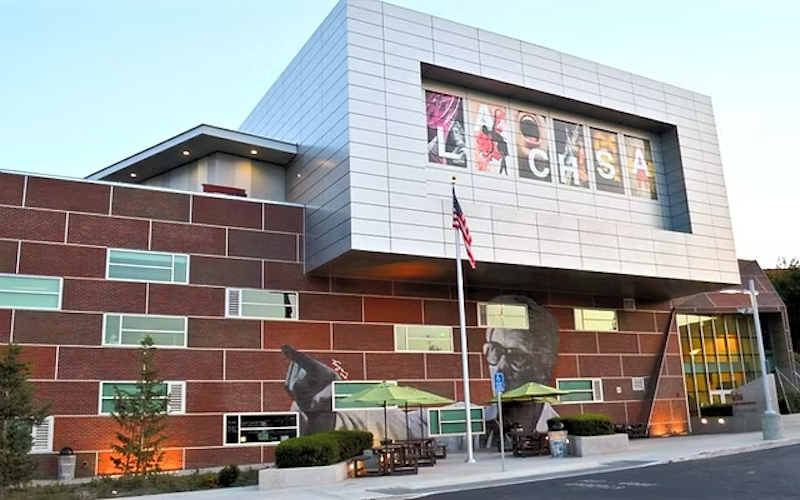
Los Angeles County High School for the Arts, located on the campus of California State University, Los Angeles (Photo, courtesy of LACSA)
SR: How does a young actor go about networking?
DA: It’s not what you know, it’s who you know. A lot of people brush that off but knowing people is a combination of checking in and staying in touch. Eventually once you have that relationship and they’re doing something that excites you, ask to be a part of it. It’s scary to ask for something and many artists feel like they need to earn it first but you can earn it while you’re doing it. You don’t need to earn your place, then ask for permission to get that place. Stay in touch with people, even if you don’t think you’re allowed to; reach out to them and they’ll be excited by your interest in their work. Stay in touch, ask, and be sincere. At the end of the day, if you really do like what they do then you are sincere.
SR: What is in the tool kit that an actor needs to be considered a good actor?
DA: Auditioning is in the moment. You have to be a good auditioner and quickly identify what you want, how you get it, what’s keeping you in the room and what’s keeping them in the room. People who book (roles), book more because they’re constantly practicing that. For the art itself a lot of people forget curiosity and get beaten down by people you meet on the way who make you wonder if you really want to do this. Again, the answer has to come from within you. See a lot of stuff, drink it in, [absorb] it and interpret it yourself.
SR: What are the skills young actors need and often are lacking?
DA: Confidence in themselves. Get someone to really forget about themself and be invested in the process. Often teachers will pick up on a habit actors have and tell them to stop, making the actor focus on the habit instead of listening (to their scene partner) and what they want. When we’re young we want to do good and only do the thing we did before that works. But you have to be open minded, you have to earnestly try things or you won’t ever expand your ability. Get past the confidence issue by being so excited by what you do that you forget that you are not confident. So much of confidence is just time. The people who are really good have put a lot of time into it and don’t care about what others think because they feel so comfortable. Give yourself permission to be awesome.